
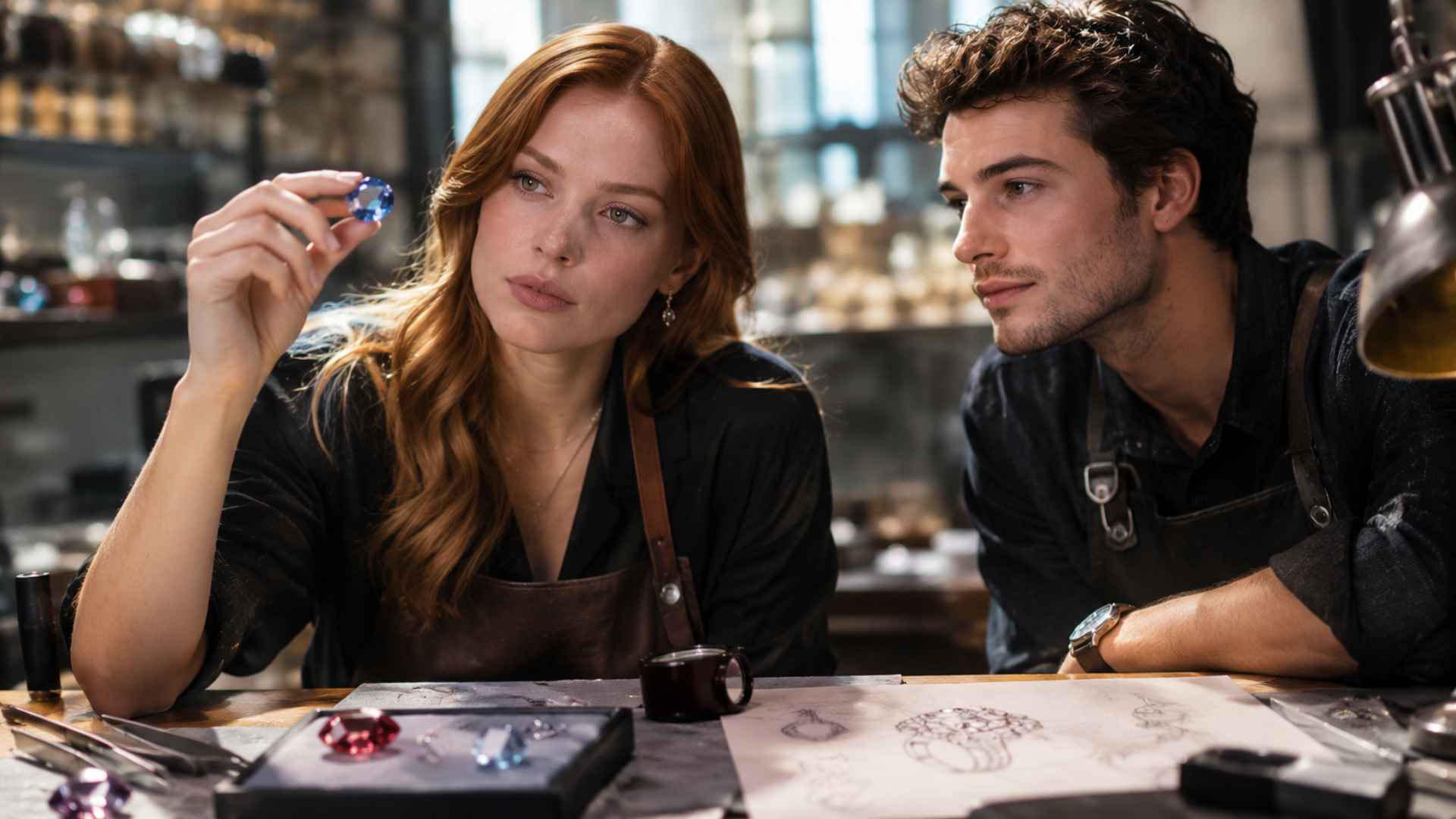
Gemstone cutting plays an important role in determining the appearance, proportions, and visual character of fine jewelry. Two gemstones with similar color and weight can look noticeably different when their cutting styles produce different patterns of reflected light. For jewelry designers, selecting a gemstone involves more than choosing its mineral variety. Shape, facet arrangement, depth, and surface finish all influence the final composition.
Gem cutters work with the physical properties of each stone, including its hardness, clarity, color distribution, and optical behavior. Some materials respond particularly well to faceted designs, while others are better suited to polished, rounded surfaces. The cutting process also involves balancing visual appearance against weight retention, since removing material changes the finished stone’s size and commercial value.
Gemstone shape and cutting style are related but distinct characteristics. Shape describes the stone’s outline when viewed from above, such as oval, round, pear, or rectangular. Cutting style refers to the arrangement of facets or the treatment of the stone’s surface. Recognizing this distinction allows jewelry designers to compare stones more accurately and select settings suited to their individual proportions.
Brilliant Cuts and Light Reflection
Brilliant cuts use triangular and kite-shaped facets arranged to produce noticeable light reflections and flashes. The round brilliant is particularly associated with diamonds, although brilliant-style faceting also appears in colored gemstones. Facet angles and proportions affect the interaction between light and the stone, making cutting precision important to its final appearance.
Brilliant-style gemstones frequently serve as central features in rings, pendants, and earrings. Their reflective appearance can create visual contrast against polished metal surfaces or smaller accent stones. However, brightness depends on the material’s optical properties as well as its cut. Identical facet arrangements do not necessarily produce identical results in gemstones with different refractive indices or levels of transparency.
Step Cuts and Mixed Facet Arrangements
Step cuts feature rows of approximately rectangular facets arranged around the gemstone in parallel tiers. Emerald and baguette cuts are familiar examples. These arrangements often emphasize broad flashes of light, internal clarity, and visible color rather than the smaller reflections associated with brilliant cuts. Their geometric appearance makes them suitable for structured jewelry designs and symmetrical arrangements.
Mixed cuts combine elements of brilliant and step faceting within the same gemstone. Some feature brilliant-style crowns with step-cut pavilions, while others reverse the arrangement. This approach can help cutters manage visual brightness and color distribution. Oval and cushion-shaped colored gemstones commonly appear in mixed styles, although their final proportions vary according to the material and intended design.
Cabochons and Gemstone Setting Considerations
Cabochon cutting produces a polished, generally rounded surface without conventional faceting. This treatment is commonly associated with opaque and translucent materials, including turquoise, certain agates, and varieties of opal. Cabochons are also used to display optical effects such as asterism in star sapphires or chatoyancy in cat’s-eye gemstones. Their curved surfaces create a different visual character from faceted stones.
The selected cutting style affects the jewelry setting. Faceted gemstones commonly require appropriately positioned prongs, bezels, or other structures that accommodate their girdles and pavilion depths. Cabochons often work well with bezel settings that follow their curved outlines. Designers must also consider stone durability because cleavage, fractures, or exposed edges can influence the risk of damage during everyday wear.
Successful gemstone selection combines appearance with practical construction requirements. Color distribution, visible inclusions, cutting symmetry, and proportions all deserve attention before a mounting is finalized. Gemstones should be evaluated individually rather than assuming that a particular cutting style guarantees superior quality. Careful coordination between the lapidary and jewelry designer helps preserve the stone’s visual characteristics while producing a secure, wearable finished piece.