
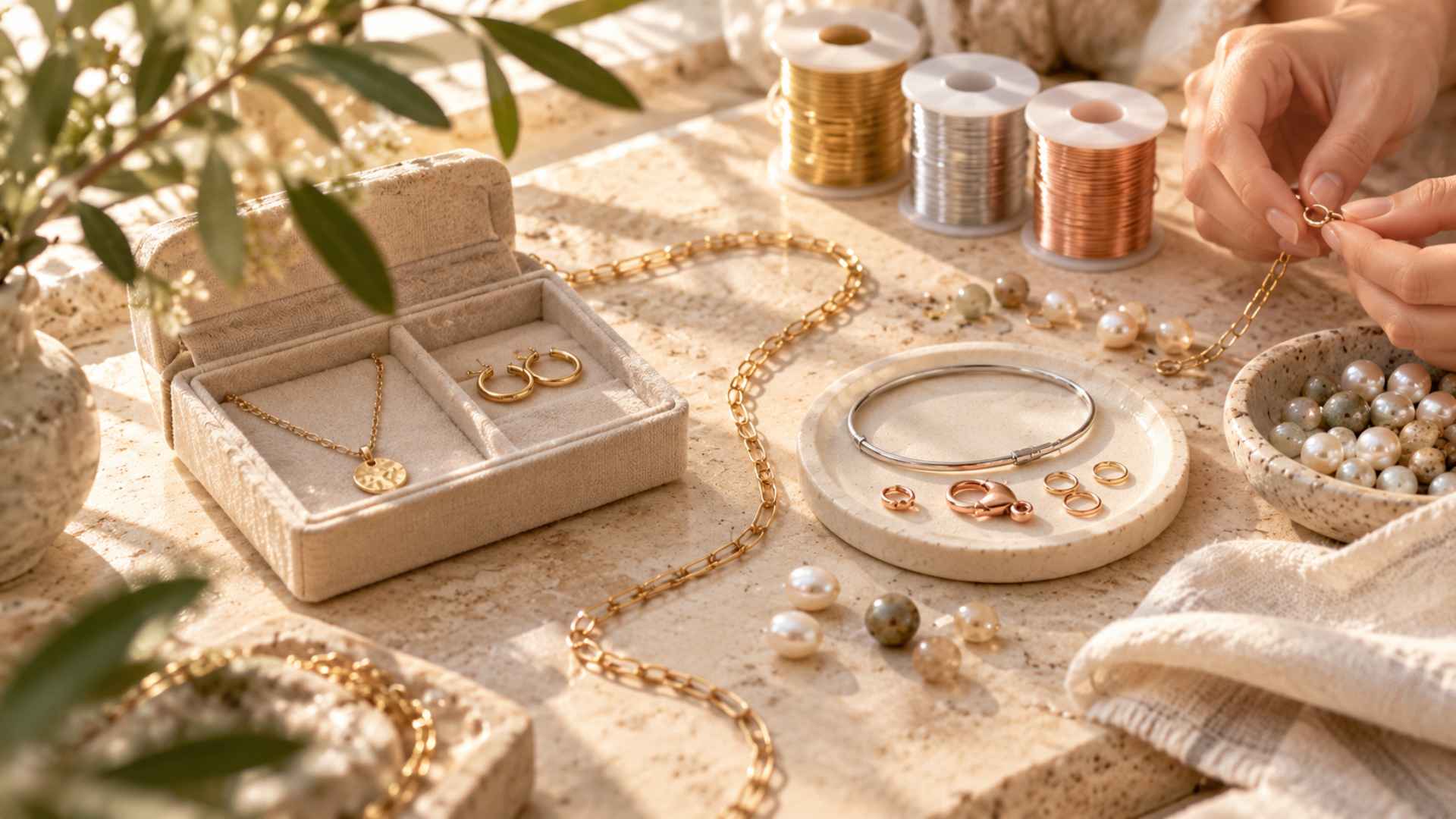
A jewellery design can look beautiful on a worktable and still feel awkward once someone wears it throughout the day. A pendant might turn sideways, a bracelet could catch on clothing, or an earring may feel heavier than expected. These problems often begin with material decisions rather than decorative details. A little attention to balance can prevent discomfort before it appears. Choosing metal, wire, and connecting parts with everyday movement in mind gives a design a better chance of becoming something people reach for regularly instead of leaving it in a drawer.
Good material planning starts with a few ordinary observations. Consider whether a piece will be worn at work, during travel, or only for special occasions. Think about contact with perfume, handwashing, skin, and clothing. Even the way a person fastens jewellery matters. A necklace intended for daily use needs a different balance of strength, comfort, and convenience from an elaborate piece worn for a single evening. Making these decisions early can also prevent wasted supplies and unnecessary repairs. Sketching the intended size and weight helps keep those choices realistic.
Match Metal Choices to the Way Jewellery Is Worn
Metal selection involves more than matching a preferred colour. Sterling silver can bring a bright finish to rings and pendants, while gold alloys offer different shades and levels of hardness depending on their composition. Brass and copper are appealing for warm tones and affordable experimentation, although their surfaces may change with exposure to moisture and skin oils. For jewellery worn frequently, consider not just the initial appearance but also how readily the wearer can clean and maintain the surface without damaging delicate details. Textured surfaces, for instance, may require gentler cleaning than smooth ones.
Comfort and skin compatibility deserve equal attention. People who react to certain metal alloys may need carefully identified materials for components touching the skin, particularly earring posts and necklace chains. A decorative charm with a different metal composition may be less troublesome than a clasp resting against the neck all day, but sensitivity varies. When buying supplies, look for clear descriptions of the base metal and any coating. A familiar colour alone does not confirm the underlying material or guarantee that an item will suit sensitive skin. Reliable suppliers should be able to explain their product specifications.
Select Wire for Shape, Support and Movement
Wire should be chosen according to the task it performs. A wire wrapped pendant needs enough flexibility to form neat curves, while a loop supporting a heavier charm must resist opening during wear. Very thin wire can create delicate patterns but may distort when pulled or snagged. Thicker wire offers more structure, although it can make small details appear bulky. Try forming a sample loop before committing to a full design, then gently test its movement. This small trial can reveal whether the wire feels springy, keeps its shape, or needs a different thickness. Consistent measurements also make replacement parts easier to choose later.
Small Components That Influence Comfort and Security
Findings are often selected at the end of a project, yet they determine many of the ways jewellery behaves on the body. A connector that is too large can dominate a delicate chain, while one that is too small may be difficult to handle or fail to accommodate neighbouring parts. Hardware should also match the overall scale and movement of the design. Before assembly, place each finding beside its intended materials and check that openings, wire diameters, and attachment points fit together without forced bending. This check is particularly useful when combining supplies from different manufacturers.
Clasps That Suit Daily Routines
A clasp should feel manageable to the person who will use it. Small spring ring clasps may look discreet, but some wearers find them difficult to operate without help. Lobster clasps offer a familiar alternative, while toggle clasps can be convenient on designs where tension and placement keep the bar seated. Each option needs to be evaluated in context because ease of opening is not the same as security. Test the fastening with the full weight of the finished piece and consider whether the wearer can close it comfortably. The clasp should remain accessible without becoming the visual centrepiece.
Earring Parts That Feel Comfortable
Earrings introduce another practical challenge because small differences in weight become noticeable after several hours. Large decorative drops may need lighter beads, shorter components, or a more balanced arrangement to reduce pulling. Posts, hooks, and backs must also hold their position without irritating the ear. The attachment point influences whether an earring hangs straight or twists while walking. Checking a prototype in a mirror, rather than judging it only when laid flat, can reveal movement problems that are easy to miss during assembly. Materials with similar appearances can still behave differently in motion.
Connectors That Protect Delicate Designs
Jump rings, crimped connections, and wire loops create the transitions between decorative elements. These joints deserve close inspection because a single weak connection can undo hours of careful work. Make sure jump ring ends meet cleanly and that loops have no sharp edges capable of catching fabric. For beaded designs, use crimp components suited to the particular flexible beading wire and follow the supplier’s recommended method. A gentle pull test can help identify an insecure joint, although it should never involve enough force to damage fragile stones or beads. Photographing the joint before final assembly can assist later troubleshooting.
Give Each Piece a Practical Finishing Routine
Once a piece is assembled, examine it from the wearer’s perspective. Run a fingertip carefully along accessible edges to locate rough spots, inspect the underside of pendants, and check whether dangling parts collide or tangle. Wear the piece briefly during ordinary movement to see whether its weight shifts or the fastening rotates into an uncomfortable position. Take notes on any adjustments needed before polishing or packaging. Finishing should improve comfort and reliability, not simply add shine to a surface. Small adjustments here can make a noticeable difference in daily use.
Care instructions are another part of responsible material selection. Different metals, coatings, beads, and gemstones respond differently to water, polishing products, and friction, so cleaning advice should reflect the actual components used. A soft storage pouch may reduce scratches, while keeping pieces separate can prevent chains from knotting. Tell the wearer when to remove jewellery for activities that create heavy impact or expose it to harsh chemicals. Thoughtful choices at the design stage, followed by straightforward care guidance, help jewellery retain both its appearance and its usefulness over time.