
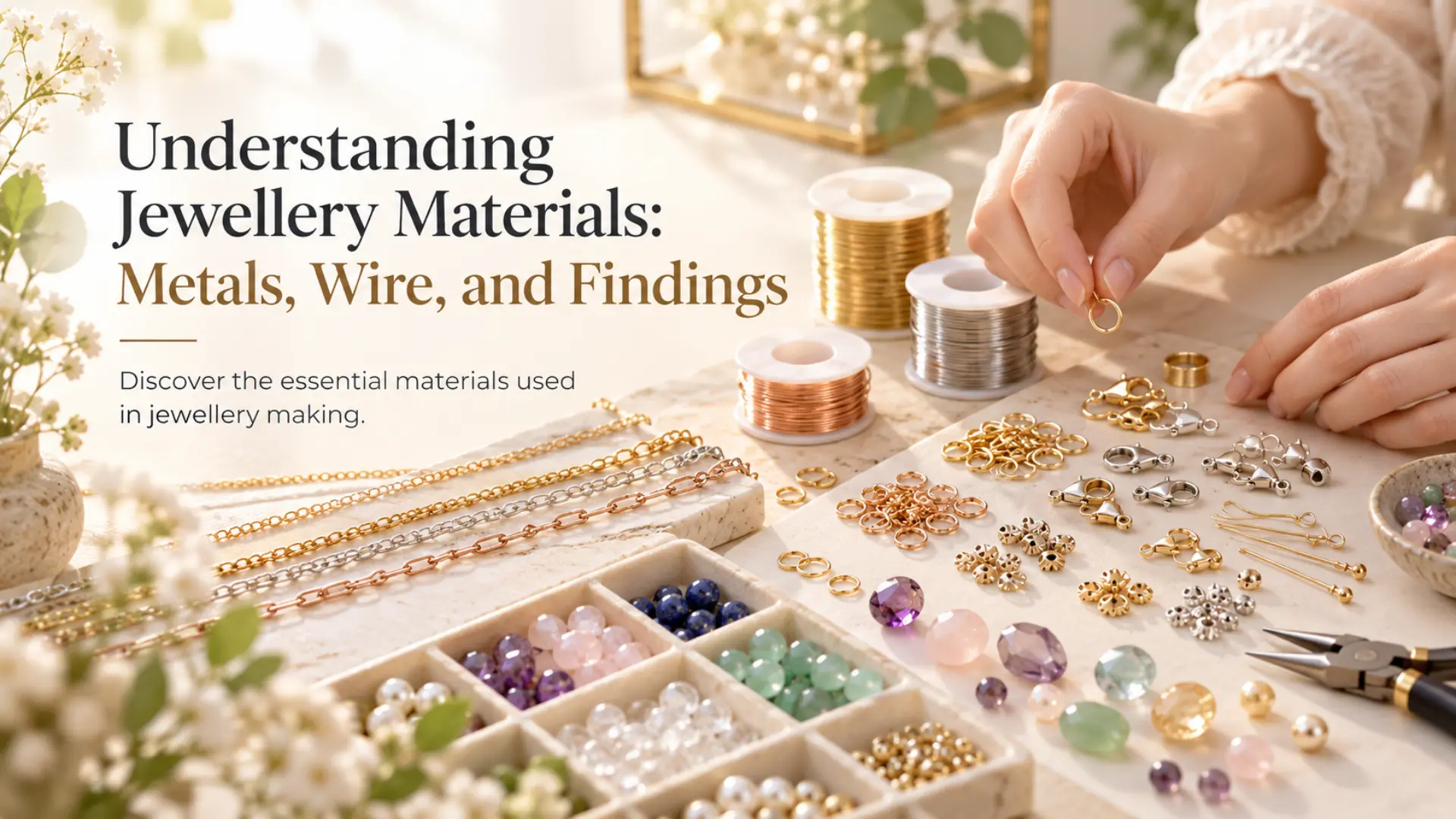
The materials used in jewellery making influence far more than the appearance of a finished piece. Different metals, wires, and connecting components affect durability, weight, flexibility, maintenance, and the techniques required during construction. A delicate necklace and a frequently worn ring may require very different material choices, even when their visual designs appear similar. Some materials can be bent and shaped easily, while others demand specialised equipment or careful control of force and temperature. Understanding these differences is an important part of creating jewellery that functions as intended. Material knowledge also helps explain why certain construction methods are suitable for one project but inappropriate for another.
Jewellery materials can be divided into several broad categories, including precious metals, base metals, gemstones, decorative beads, and manufactured findings. Each category contains materials with distinctive physical and chemical properties that influence how they are used. Copper, for example, behaves differently from sterling silver, while flexible beading wire performs a different function from rigid decorative wire. Clasps and jump rings may seem less visually important than gemstones or pendants, but they play an essential role in connecting and securing components. Material compatibility becomes particularly important when jewellery is expected to withstand frequent movement and handling. Considering these practical factors alongside appearance helps create a more balanced approach to jewellery design.
Precious Metals and Base Metals in Jewellery Making
Precious metals such as gold, silver, and platinum have been used in jewellery for centuries because of their appearance, workability, and resistance to particular forms of corrosion. Pure gold is relatively soft, so jewellery alloys often combine it with other metals to modify its hardness, colour, and working properties. Sterling silver is a widely recognised silver alloy containing 92.5% silver by mass and 7.5% other metals, most commonly copper. Alloy composition affects how a metal responds to forming, polishing, and everyday wear. Different alloys also require appropriate joining techniques and finishing methods, especially when heat is involved. Recognising these characteristics is important before selecting a precious metal for a specific jewellery project.
Base metals, including copper and brass, are also commonly used in decorative jewellery and component manufacturing. Brass is an alloy based primarily on copper and zinc, although its exact composition can vary. Copper and many copper-containing alloys can develop surface discolouration through chemical reactions with substances in their environment. Some jewellery uses plating or other surface finishes to modify colour and appearance, but the durability of these finishes depends on their composition, thickness, and use. Base-metal components may also contain substances such as nickel, which can cause allergic contact dermatitis in susceptible individuals. Evaluating metal composition and surface treatments is therefore relevant to both maintenance and suitability for skin contact.
How Wire Thickness and Hardness Affect Jewellery Construction
Metal wire is available in different thicknesses, cross-sectional shapes, and degrees of hardness, all of which influence how it behaves during construction. Round wire is commonly used for loops, decorative wraps, and connecting components, while square or half-round wire can be useful for particular wrapping techniques. Thicker wire generally requires greater force to bend than thinner wire of the same material and condition. However, the exact behaviour also depends on the metal alloy and whether it has been softened or hardened through processing. Choosing wire based only on appearance can lead to connections that are too flexible, excessively rigid, or difficult to finish. Understanding wire dimensions and working properties helps avoid these problems.
Wire hardness is often described using terms such as dead-soft, half-hard, and full-hard, although terminology and availability vary between suppliers. Softer wire is usually easier to shape into curves and decorative forms, making it useful for certain wrapping techniques. Harder wire may provide greater resistance to deformation when used for structural components. Many metals also undergo work hardening as they are bent or formed, which increases resistance to further plastic deformation. Repeatedly bending a small section back and forth can eventually cause fatigue and breakage. Jewellery makers must therefore balance ease of shaping with the stability required in the completed design.
The Importance of Findings, Clasps, and Connectors
Jewellery findings are manufactured components used to assemble, connect, support, or fasten pieces of jewellery. Common examples include jump rings, clasps, ear wires, headpins, eye pins, crimp beads, and chain connectors. Although these parts may be small, their dimensions and construction influence the reliability of the complete item. A clasp must suit the weight and intended use of the jewellery, while a jump ring should be strong enough for the forces it may experience. Components also need to be compatible with surrounding materials, including the wire, chain, or cord used in the design. Choosing findings without considering their function can undermine otherwise careful workmanship.
Jump rings illustrate the importance of seemingly simple construction details. Most standard jump rings have a small opening that allows them to be connected to other components without soldering. They are generally opened by twisting the ends sideways rather than pulling them directly apart, which helps preserve their circular shape. Closing the ring correctly reduces the chance that a chain or connected component will slip through a visible gap. Some applications require soldered or otherwise permanently closed rings, especially where greater connection security is necessary. The appropriate choice depends on the design, material, expected loading, and construction method.
Material Care, Surface Finishes, and Long-Term Durability
Jewellery maintenance depends on the materials used and the type of surface finish applied during manufacture. Sterling silver can tarnish when it reacts with sulphur-containing substances in the environment, producing a darker surface layer. Copper-containing materials may also change appearance through oxidation and other chemical reactions. Polishing can restore the appearance of certain uncoated metals, but abrasive methods may remove material or damage delicate textures. Plated jewellery requires particular care because aggressive cleaning and repeated abrasion can wear away thin surface layers. Understanding the construction and finish of a piece is therefore important before choosing a cleaning method.
Storage conditions and handling habits also influence how jewellery changes over time. Humidity, cosmetic products, cleaning chemicals, and contact with hard surfaces can affect different materials in different ways. Gemstones and decorative beads vary in hardness, toughness, porosity, and sensitivity to heat or chemicals, so a single cleaning method is not appropriate for every design. Regularly checking clasps, wire connections, and other load-bearing components can help identify potential problems before they lead to loss or damage. Jewellery durability is influenced by the combined effects of material properties, construction quality, intended use, and maintenance. Understanding these relationships allows jewellery makers and wearers to make more informed decisions about the materials and care of individual pieces.