
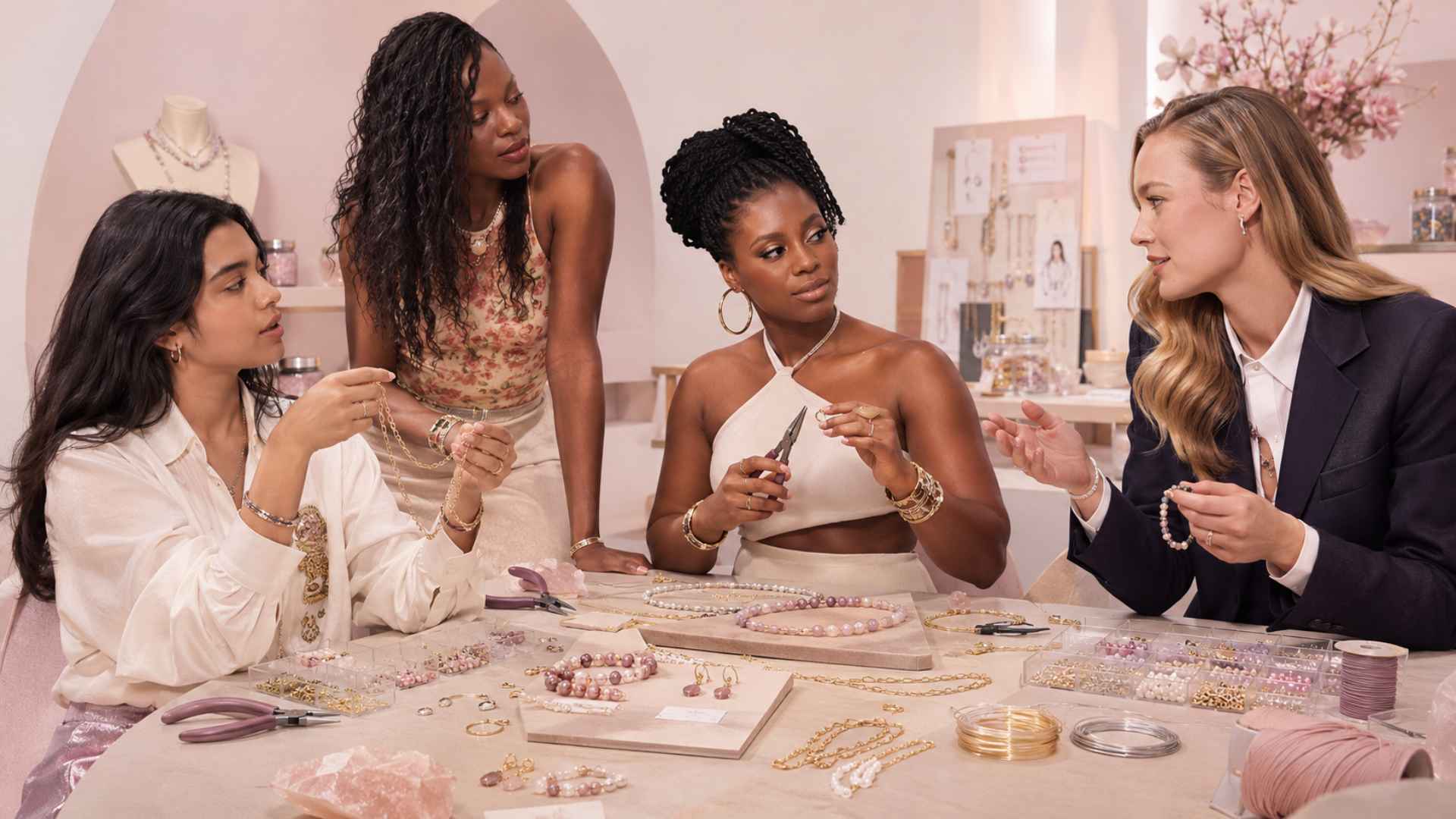
Jewellery making involves more than choosing attractive beads, stones, or decorative elements. The materials and hardware used during assembly play an important role in determining the appearance, strength, comfort, and overall quality of each finished piece. Whether creating necklaces, bracelets, earrings, or anklets, understanding the purpose of different jewellery components helps produce designs that are both beautiful and practical. From metal findings to flexible strings and connecting rings, every small part contributes to the final result. Choosing suitable materials also makes the assembly process easier and helps jewellery maintain its shape and condition during regular use.
Different jewellery designs require different combinations of materials and hardware. Some pieces need strong metal connections, while others depend on flexible cords, secure clasps, or carefully selected decorative components. Factors such as weight, material compatibility, intended use, and design style should always be considered before assembly begins. Having the right supplies available allows jewellery makers to work more efficiently and avoid common construction problems. It also helps ensure that individual components fit together properly and create a balanced finished product.
Common Materials Used In Jewellery Assembly And Construction
One of the most widely used materials in jewellery assembly is metal. Stainless steel, sterling silver, gold, brass, and copper are common choices for making jewellery components. Each metal has different characteristics that influence its appearance, durability, maintenance requirements, and price. Stainless steel is known for its resistance to corrosion and relatively low maintenance, making it suitable for everyday jewellery. Sterling silver offers a classic appearance but can tarnish over time when exposed to air and moisture. Brass and copper are often selected for their warm colours and decorative qualities, although they may require occasional cleaning to maintain their appearance.
Another important material is the stringing medium used to hold jewellery components together. Beading wire, nylon cord, silk thread, elastic cord, and leather are frequently used depending on the design. Beading wire is commonly chosen for necklaces and bracelets because it combines flexibility with good resistance to stretching. Elastic cord is useful for stretch bracelets because it allows the wearer to put them on without a traditional clasp. Silk thread is often used for pearl necklaces, especially when individual knots are placed between pearls to reduce friction. Leather and nylon cords provide different textures and are popular for casual or contemporary jewellery styles. Selecting the correct stringing material helps improve the flexibility and reliability of the finished piece.
Jewellery Findings And Connecting Hardware
Jewellery findings are small hardware components used to connect, secure, and finish different parts of a jewellery design. Clasps are among the most important findings because they allow necklaces and bracelets to open and close safely. Common options include lobster clasps, spring ring clasps, toggle clasps, magnetic clasps, and hook clasps. Each type offers a different appearance and fastening method. Lobster clasps are widely used because their spring loaded mechanism provides a secure connection. Toggle clasps are often selected for decorative purposes, while magnetic clasps can make jewellery easier to fasten, although their holding strength must be suitable for the weight of the piece.
Jump rings and split rings are also essential when assembling jewellery. These small circular connectors join components such as clasps, chains, pendants, and charms. Jump rings are available in different diameters, thicknesses, and metal finishes. They are usually opened sideways with jewellery pliers rather than pulled apart, helping preserve their original shape. Split rings have a double layer construction similar to small key rings, which can provide a more secure attachment for certain designs. Other useful findings include head pins, eye pins, crimp beads, crimp tubes, bead caps, and earring hooks. These components help hold decorative elements in place, create hanging details, and provide neat finishes to assembled jewellery.
Jewellery Making Tools And Their Role In Secure Assembly
Using suitable jewellery making tools is just as important as selecting the correct materials and findings. Round nose pliers, flat nose pliers, chain nose pliers, and wire cutters are among the most commonly used tools. Round nose pliers help create loops in jewellery wire, especially when attaching beads to head pins or eye pins. Flat nose and chain nose pliers are useful for gripping metal components, opening jump rings, and adjusting small connections. Wire cutters are designed to trim excess wire cleanly, making them particularly useful when working with beading wire and metal jewellery components. Using the correct tool for each task helps prevent unnecessary damage to delicate materials.
Crimping tools are another useful addition, especially for designs made with beading wire. They are used to compress crimp beads or crimp tubes around the wire, creating a connection that helps prevent beads from slipping off. Measuring tools, such as rulers and jewellery sizing gauges, also help maintain consistent dimensions when producing necklaces, bracelets, and earrings. A bead mat or work surface can keep small components from rolling away during assembly. Good lighting and organised storage are equally helpful because many jewellery findings are very small and can be difficult to identify when mixed together.
Material compatibility should always be considered when combining different jewellery components. For example, certain metals may react differently when exposed to moisture, sweat, or other environmental conditions. Some people also experience skin sensitivity to particular metal alloys, especially those containing nickel. Choosing appropriate materials for skin contact can make jewellery more comfortable to wear. Finished pieces should also be checked for loose connections, sharp wire ends, weak clasps, and uneven assembly. Regular inspection and proper storage help reduce damage, tangling, and unnecessary wear. By understanding the function of jewellery materials, findings, and assembly tools, makers can create pieces that look attractive, feel comfortable, and remain dependable through everyday use.