
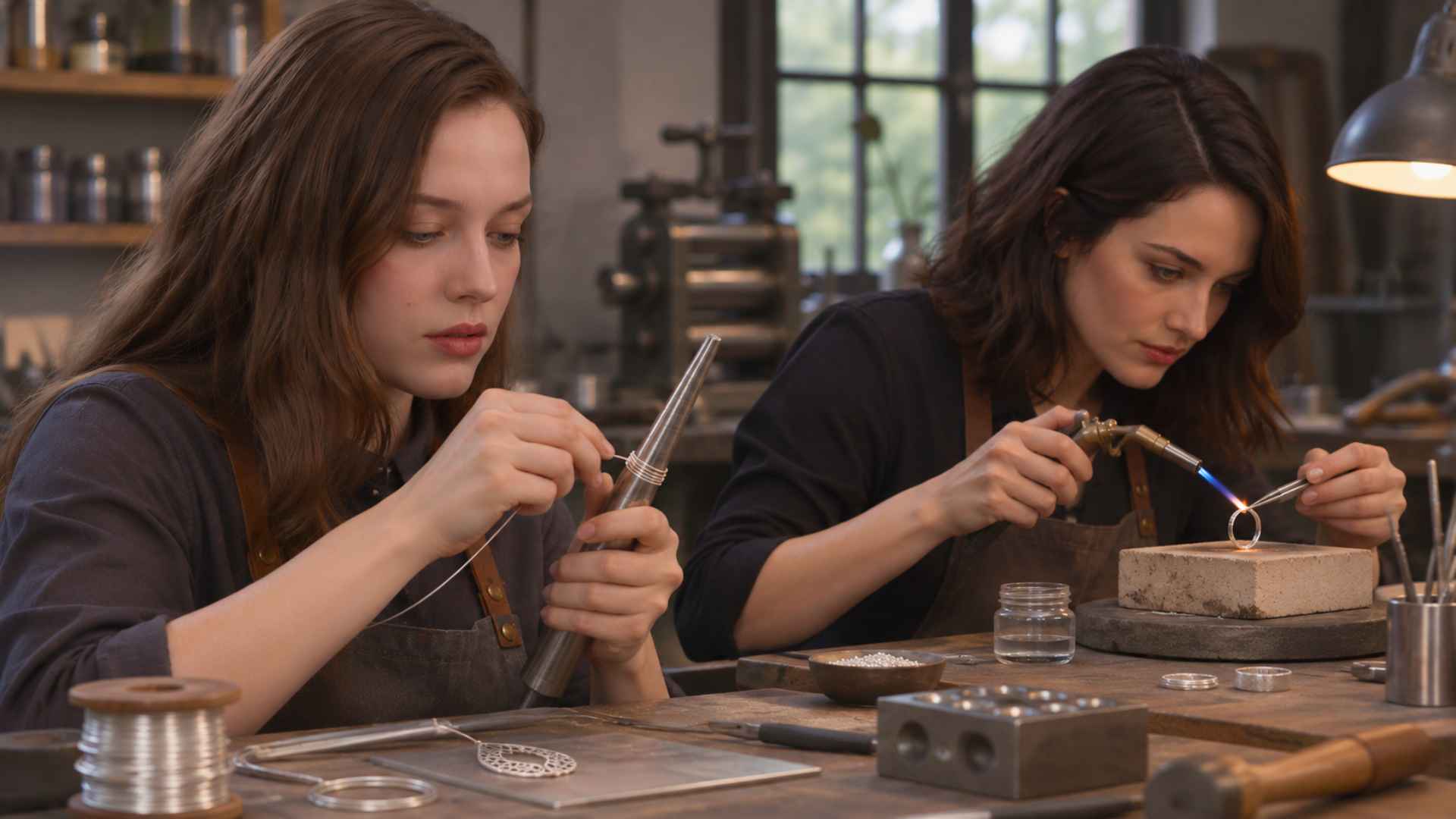
Silver jewellery is shaped by more than its outward design. Every finished piece reflects decisions about metal composition, thickness, joining methods, and surface treatment. Silversmiths use a combination of traditional hand skills and workshop equipment to turn raw materials into rings, pendants, chains, and decorative objects. Each stage affects the appearance of the result, but it can also influence strength, comfort, and the likelihood of future repairs. Knowledge of these processes offers a useful way to assess jewellery beyond its polish or price.
Metalworking techniques vary according to the shape and purpose of an object. Thin sheet silver can be formed into hollow structures, while wire can become links, settings, or intricate details. Some designs are assembled from separate components; others begin as cast forms that require further finishing. Although machines can provide consistency, manual operations remain important for fitting joints, refining edges, and correcting small imperfections. The relationship between material properties and fabrication methods is central to reliable silver craftsmanship.
Silver Alloys and Material Selection
Pure silver, commonly identified as 999 fine silver, contains at least 99.9 percent silver. Its high ductility makes it suitable for certain decorative applications, but it is relatively soft and can deform under repeated pressure. Sterling silver contains 92.5 percent silver, with the remaining 7.5 percent usually made up of copper. This addition increases hardness and makes the alloy practical for many pieces that are handled or worn regularly. The familiar 925 mark refers to silver fineness, not a guarantee of flawless workmanship or resistance to all damage.
Material selection also depends on the intended construction. Softer fine silver may be useful for a bezel that needs to be pressed around a stone, whereas sterling is often preferred for structural components. Sheet thickness, wire diameter, and the size of connecting links all influence durability. Copper in conventional sterling alloys can react with oxygen during heating and contribute to surface discoloration. Silversmiths account for this behavior when planning heat treatment, soldering, and cleaning, rather than judging an alloy solely by its initial shine.
Forming, Annealing, and Joining Techniques
Fabricated jewellery usually begins with sheet, wire, or metal stock that is cut and shaped. Jewellers’ saws create outlines and openings, files refine edges, and mandrels help form consistent curves. Hammers and stakes can shape sheet into three dimensional objects through repeated, controlled blows. Cold deformation makes silver harder and less flexible, a process known as work hardening. When the metal becomes difficult to form, carefully controlled annealing restores ductility by changing its internal structure. Forming and annealing may be repeated several times during complex work.
Separate components are commonly joined with silver solder, an alloy formulated to melt below the temperature of the parent metal. Clean, closely fitted surfaces help molten solder flow into a joint, while flux limits oxidation during heating. Poorly prepared seams may remain weak or show visible gaps after finishing. Casting offers another production route: molten metal fills a prepared mould, making shapes that may be difficult to construct from sheet alone. Cast pieces still require inspection for defects, followed by filing, abrasion, and other finishing work. Neither casting nor hand fabrication automatically determines quality; execution matters more than the method’s label.
Surface Finishes, Inspection, and Practical Care
Surface texture can change the character of silver without changing its basic shape. Abrasive papers and polishing compounds create smooth reflective surfaces, while controlled brushing produces a satin appearance. Chasing and repoussé add relief to sheet metal by working it from the front or back. Engraving removes small amounts of material to create lines and patterns. Each technique requires attention to thickness, since excessive filing or polishing can weaken delicate features. Decorative detail is most effective when it does not compromise a clasp, setting, or load bearing connection.
Quality checks should extend beyond appearance. Ring shanks need sufficient thickness for their intended use, chain links should close securely, and clasps must operate without excessive force. On stone set jewellery, prongs and bezels should hold the stone without cracks or sharp edges. Visual inspection under magnification can reveal uneven joints, tool marks, or gaps that are difficult to notice unaided. In professional workshops, eye protection, ventilation suited to the process, and safe handling of heated metal and cleaning solutions are also part of sound practice. These precautions protect workers rather than altering the design itself.
Silver surfaces can tarnish when they react with sulfur containing substances in the surrounding environment, forming a dark surface layer. Tarnish is generally a surface issue rather than evidence that a piece has lost its silver content. Gentle cleaning with methods appropriate to the jewellery helps preserve its finish, but abrasive polishing removes a small amount of material each time. Items with pearls, porous gemstones, or intentionally darkened details may need different treatment from plain silver. Dry storage in separate compartments reduces tangling and surface scratches, while periodic inspection can identify loose settings or worn links before they fail. Durable silverwork results from suitable alloys, careful construction, restrained finishing, and maintenance that respects the materials involved.