
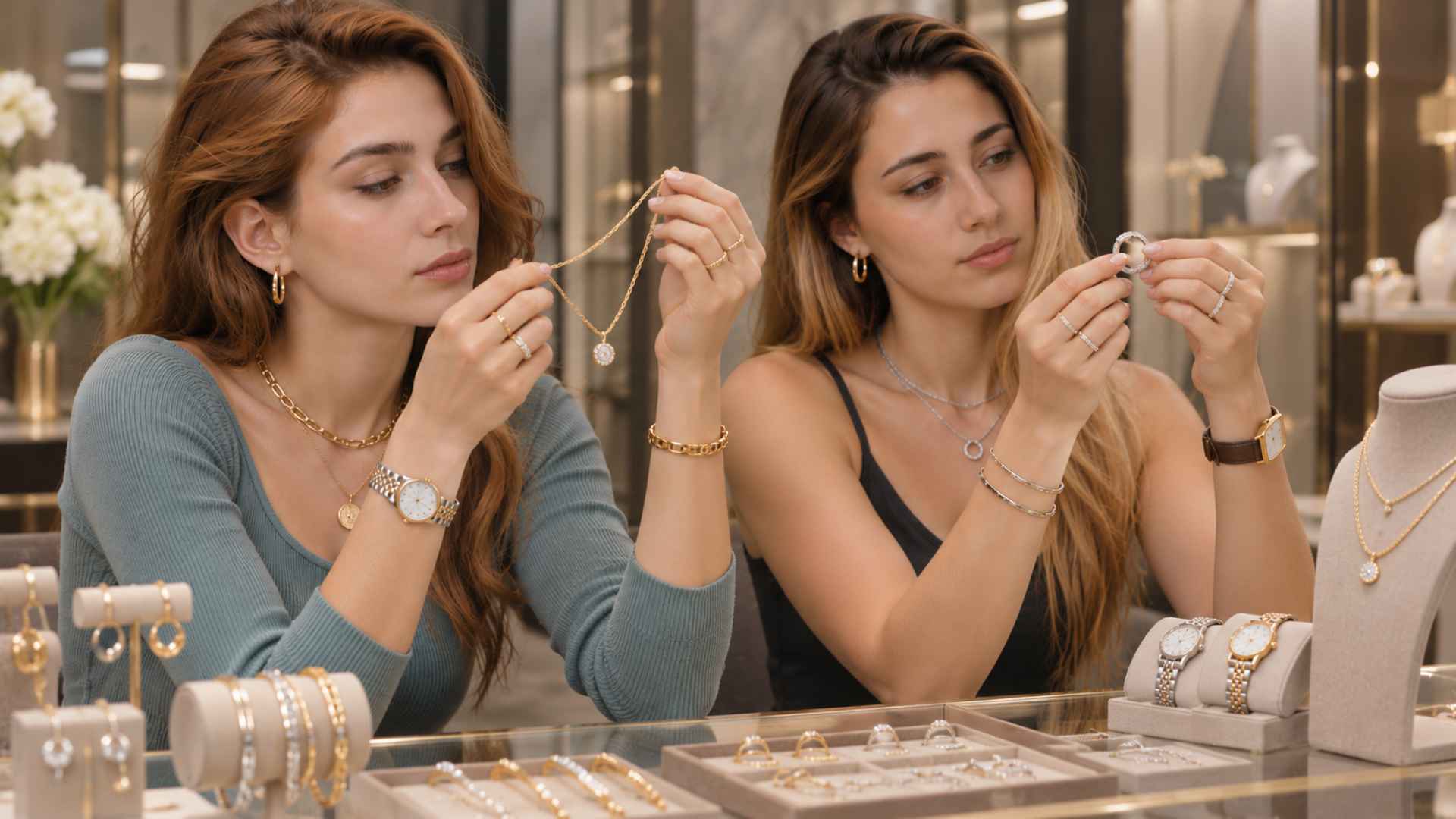
Jewelry and personal accessories face repeated contact with skin, clothing, moisture, and household surfaces. A necklace may rub against fabric throughout the day, while a watch strap experiences movement, sweat, and frequent fastening. These ordinary conditions gradually affect surfaces, joints, and finishes. Choosing accessories for routine use therefore involves more than appearance. Materials, manufacturing details, comfort, and maintenance all influence whether an item remains useful after months or years of wear. Durable pieces can complement different outfits without requiring constant replacement.
Long service life does not mean that a material is immune to scratches, tarnish, or changes in color. Gold alloys, silver, stainless steel, leather, and synthetic materials respond differently to water, chemicals, and friction. A product may resist one form of deterioration while remaining vulnerable to another. For example, a hard surface may be relatively scratch resistant but still contain fragile components. A practical collection gives priority to repairable construction, suitable materials, and designs that match the conditions in which the accessories will be worn.
Jewelry Metals and Construction for Regular Use
Gold jewelry is commonly described by karat, which indicates the proportion of gold in the alloy. Fourteen karat gold contains 14 parts gold out of 24, while eighteen karat gold contains 18 parts. Other metals influence the alloy’s hardness and color, so higher gold content does not automatically mean greater resistance to wear. Sterling silver contains 92.5 percent silver and can darken through reactions with sulfur containing substances in its environment. Stainless steel generally resists corrosion well, although the precise alloy and surface finish influence its performance.
Construction matters alongside metal composition. Necklace clasps, bracelet links, earring posts, and ring settings are common points of mechanical stress. A clasp that closes securely and a stone setting without visible movement provide more useful evidence of quality than a decorative label. Plated jewelry has a relatively thin surface layer that may wear away as friction accumulates; its service life depends on coating thickness and use. People with metal sensitivities should also examine material specifications, since some alloys contain nickel and terms such as hypoallergenic do not guarantee compatibility with every person.
Leather Bags, Belts, and Everyday Care
Leather accessories vary widely in quality because leather type, processing, and construction differ. Full grain leather retains the original grain surface, whereas corrected or coated surfaces may have a more uniform appearance. Neither appearance alone nor the phrase genuine leather establishes overall durability. Stitch quality, edge treatment, zipper performance, strap attachments, and hardware can determine the useful life of a bag or belt. A well designed crossbody bag also distributes its contents comfortably, while a belt needs sufficient flexibility to tolerate repeated bends without damage.
Care should match the manufacturer’s guidance and the specific finish. Many finished leather surfaces can be cleaned with a soft, slightly damp cloth and allowed to dry away from direct heat. Excess moisture, prolonged sunlight, and unsuitable cleaning agents can affect color or flexibility. Conditioners may be appropriate for some leathers but not suede, delicate finishes, or all coated surfaces; testing on a concealed area reduces the risk of visible marks. Storing bags without excessive weight helps preserve their shape, and early repair of loose stitching can prevent a small defect from becoming structural damage.
Watches, Sunglasses, and Practical Accessory Choices
A daily watch needs a secure strap, a readable dial, and a case suitable for its intended environment. Quartz watches usually need periodic battery replacement unless they use a rechargeable power source, while mechanical watches may require servicing according to their maker’s recommendations. Crystal materials also differ: sapphire is generally more resistant to scratching than common mineral glass, although impacts can still cause damage. Water resistance markings refer to tested conditions rather than unlimited protection, and seals may deteriorate with age. Manufacturer instructions remain relevant before swimming or exposing a watch to water.
Sunglasses should be evaluated for ultraviolet protection before frame style. Lenses marked as blocking 99 to 100 percent of UVA and UVB radiation, or labeled UV400, provide a useful specification when the claim is reliable. Dark tint alone does not confirm adequate ultraviolet protection. Comfortable frame fit, stable hinges, and suitable lens coverage also affect daily use. A protective case reduces contact with keys and other hard objects inside a bag. For scarves and hats, fabric composition, seams, and washing instructions matter more for longevity than a seasonal fashion label.
A durable accessory collection does not need many pieces, but each item should have a clear purpose. Simple designs are often easier to pair with different clothing, although personal preference remains important. Before purchase, examine closures, seams, material disclosures, warranty terms, and whether minor repairs are possible. After purchase, remove residues gently, keep items dry when appropriate, and inspect components that receive repeated stress. Rotating accessories can also reduce concentrated wear on a single item. These habits cannot prevent normal aging, but they help preserve function and appearance while limiting avoidable replacement.