
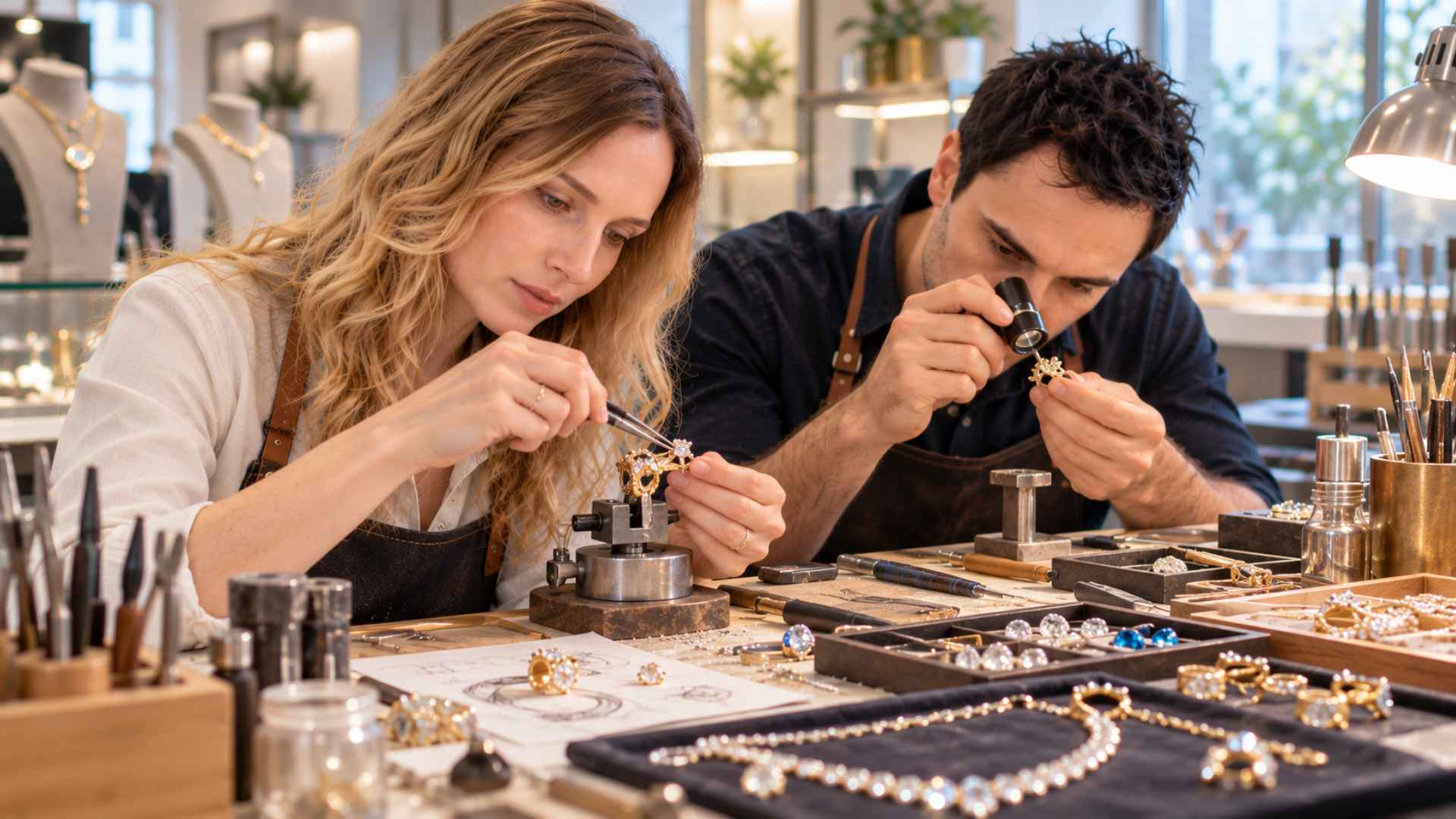
Creating beautiful jewellery involves more than choosing attractive materials and designing appealing shapes. The quality of each piece also depends on how carefully it is assembled, finished, and inspected. From shaping metal components to polishing delicate details, every stage contributes to the final appearance and durability of the jewellery. A professional finish helps transform a simple design into a refined product that feels comfortable to wear, looks visually appealing, and maintains its quality over time. Understanding the relationship between craftsmanship, material selection, and finishing methods is essential for producing jewellery that meets professional standards.
Successful jewellery production requires patience, precision, and a consistent approach to workmanship. Different materials respond to different tools and processes, so artisans must understand how to handle metals, gemstones, wires, and decorative elements without compromising their integrity. Applying suitable jewellery making techniques allows makers to create stronger connections, smoother surfaces, and more balanced designs. Whether producing handmade accessories for personal use or developing collections for commercial purposes, attention to detail can significantly improve the reliability, appearance, and long term value of every finished piece.
Essential Preparation for High Quality Jewellery Production
Proper preparation establishes the foundation for durable and professional jewellery. Before beginning a project, artisans should review the design, select compatible materials, and prepare the necessary tools. Precious metals, stainless steel, copper, and brass each have distinct properties that influence their workability and resistance to wear. Selecting the right material depends on the intended design, budget, expected usage, and desired appearance. For example, jewellery designed for everyday use may benefit from materials that resist corrosion and withstand frequent handling. Careful planning also helps reduce material waste, prevent assembly errors, and maintain consistent quality throughout the production process.
A clean and organized workspace is equally important because small mistakes can affect both the appearance and structural integrity of a piece. Tools such as pliers, files, jeweller’s saws, mandrels, and polishing equipment should be appropriate for the task and maintained in good condition. Before working, artisans should inspect their materials for scratches, defects, or irregular dimensions that could create problems later. Measuring components accurately and preparing metal edges before assembly can reduce unnecessary adjustments. This organized approach makes production more efficient while helping ensure that every component fits correctly and contributes to a balanced, professional result.
Accurate Shaping and Forming for Reliable Structures
Shaping and forming determine the proportions, symmetry, and structural strength of jewellery components. Techniques such as bending, hammering, cutting, and filing allow artisans to create consistent curves, defined edges, and carefully controlled shapes. When working with metal wire or sheet, gradual adjustments are generally preferable to excessive force, which may cause unwanted deformation or surface damage. Using suitable forming tools also helps preserve material thickness and maintain the intended design. Accurate shaping is particularly important for rings, bracelets, and earrings, where uneven dimensions can affect comfort, balance, and durability.
Secure Joining Methods for Long Lasting Jewellery
Reliable connections are essential for jewellery that must withstand regular movement and handling. Depending on the material and design, artisans may use soldering, wire wrapping, crimping, riveting, or mechanical fasteners to join individual components. Soldering can create strong, discreet connections between compatible metal parts when the correct temperature, solder, and flux are used. Wire wrapping provides an alternative for designs that require decorative connections without heat, while properly installed crimp beads can secure beaded strands. Each joining method requires careful execution, as weak connections may loosen over time. Choosing the appropriate method for the intended application helps improve structural stability without sacrificing visual appeal.
Soldering Techniques for Clean and Strong Connections
Soldering is widely used in professional metal jewellery because it can produce neat connections with minimal visible interruption to a design. Successful soldering begins with clean, accurately fitted surfaces, since dirt, oxidation, and excessive gaps can interfere with the process. Artisans should select compatible solder and flux, apply controlled heat, and use appropriate protective equipment. Excessive heating may discolor metal, damage nearby components, or weaken delicate details. After joining, the piece should be cooled and cleaned according to the materials and products used. Careful finishing with files and polishing tools removes unwanted solder residue and helps create a smooth, cohesive appearance.
Wire Wrapping and Crimping for Secure Assemblies
Wire wrapping and crimping are useful methods for creating dependable jewellery without requiring every connection to be soldered. Wire wrapping secures beads, gemstones, and decorative components through carefully formed loops and coils. Consistent tension and properly closed loops help prevent components from slipping out during wear. Crimping is commonly used for beaded necklaces and bracelets, where a crimp bead or tube is compressed with a suitable tool to secure the beading wire. The crimp should hold firmly without cutting or excessively flattening the wire. When these methods are executed correctly, they provide practical, attractive connections that support the design and improve its overall reliability.
Surface Polishing and Edge Refinement for Professional Results
Surface finishing gives jewellery its final character while improving comfort and visual quality. Filing removes rough edges, sanding helps reduce visible tool marks, and polishing creates a brighter or more refined surface depending on the desired finish. Artisans can choose between a high gloss appearance, a satin texture, or a deliberately brushed effect to complement the design. Abrasive materials should be used progressively, beginning with an appropriate grade and moving toward finer finishes when necessary. Sharp edges, burrs, and uneven surfaces should be addressed before final polishing. Careful refinement creates jewellery that feels smooth against the skin and presents a consistent, professionally finished appearance.
Protective Finishes and Quality Control for Lasting Results
Quality control should take place before a piece is considered complete. Each item should be inspected for loose connections, uneven surfaces, sharp edges, inconsistent dimensions, and visible defects. Clasps should open and close correctly, rings should retain their intended shape, and decorative components should remain securely attached under reasonable handling. Artisans should also verify that cleaning agents and finishing products have been removed where required. For jewellery intended for sale, consistent inspection standards help reduce returns and strengthen customer confidence. Clear care instructions can further support durability by explaining how to store, clean, and protect finished pieces from unnecessary damage.
Producing durable jewellery with a professional appearance requires a combination of thoughtful preparation, precise construction, reliable joining methods, and careful surface treatment. Each stage influences how the finished piece looks, feels, and performs over time. By selecting appropriate materials, applying suitable jewellery making techniques, and maintaining consistent quality checks, artisans can create pieces that balance visual appeal with practical strength. Developing these skills through careful practice also encourages greater consistency and efficiency, making it easier to produce jewellery that reflects high craftsmanship standards and delivers lasting value to its wearer.